
What are go pills in the military? Are these a new kind of drug? Not necessarily. Especially in cases of military combat, service members might take stimulants or sedatives to either promote wakefulness or sleep. Unfortunately, most stimulants and sedatives have a potential for abuse and addiction, and long-term misuse can lead to tolerance, physical dependence, and ultimately a substance use disorder.
Understanding veteran recovery is the first step — our addiction treatment center in Boca Raton, FL offers military-informed addiction care to help individuals begin their recovery journey.
Questions about our Facilities or Programs?
Our admissions coordinators are available 24/7 to answer any questions you may have as you consider whether treatment at Banyan is right for you or your loved one.
What Are Go Pills?
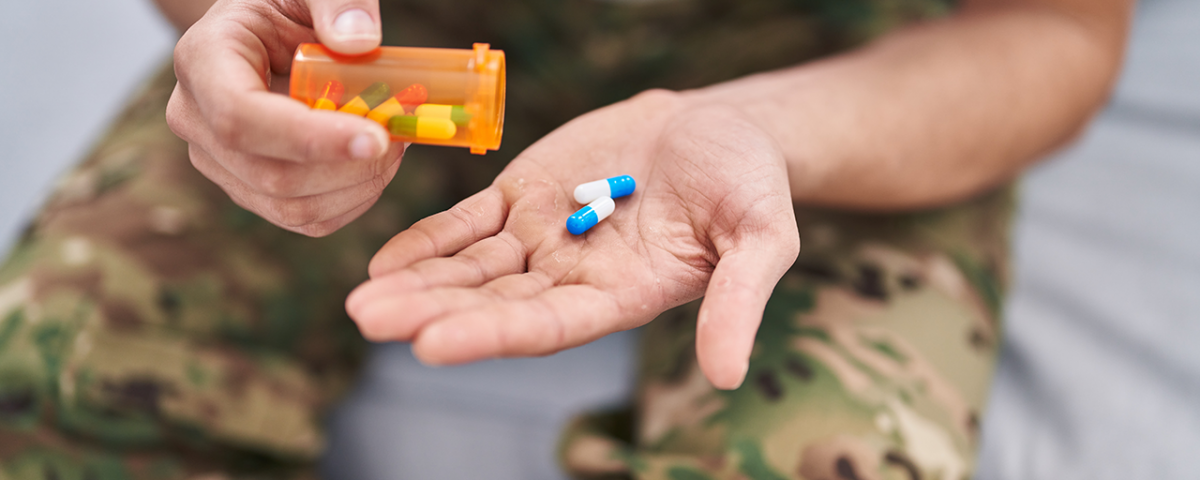
Go pills refer to stimulants or drugs that promote wakefulness, increased energy, and focus. Go pills in the military are especially abused by pilots, although service members of other positions may also take them for fatigue management, especially during combat.
In contrast to no-go pills – which are sedatives or depressants designed to promote sleep and rest – go pills for military pilots are taken to stay awake and alert. The abuse of stimulants dates to World War II, when amphetamine was used by both American and British militaries to not only fight off fatigue but also because of mood-altering effects like increased confidence and aggression.1
The demands of combat constantly fluctuate, often involving nocturnal combat and long-duration missions. Subsequently, it’s unsurprising that military service members may abuse go pills or stimulants to keep up with the demands and pressure of their jobs.
However, while these pills may be effective for a while, the body eventually becomes accustomed to them, requiring the individual to take higher doses to feel the same effects. This can ultimately lead to a substance use disorder.
Signs of Stimulant and Depressant Abuse
Stimulants like amphetamines work by blocking the reuptake of dopamine in the brain. As a result, the brain is flooded with dopamine, causing side effects like euphoria, increased energy, and elevated mood, focus, and concentration.
Long-term use of stimulants, especially when taken without a prescription, can lead to tolerance and physical dependence. This means that the individual will increase their use to experience the same effects because the body becomes accustomed to the drug. Additionally, a person who’s physically dependent on stimulants will experience withdrawal symptoms if they suddenly stop taking them.
In addition to these effects, other signs of stimulant abuse in the military include:
- Aggressive or angry outbursts
- Anxiety
- Confusion
- Deceptive behavior, lying or stealing
- Decrease in appetite and weight loss
- Delusions
- Depression
- Elevated blood pressure
- Enhanced sensory awareness
- Excessive energy or motivation
- Flight of ideas
- Going to multiple doctors to get multiple stimulant prescriptions (doctor shopping)
- Hair loss
- Hallucinations
- Hyperfocus
- Increased confidence
- Mood swings
- Ordering stimulants online without a prescription
- Paranoia
- Poor judgment and decision-making
- Racing thoughts
- Rapid heartbeat
- Risky or impulsive behavior
- Skin problems
- Sweating
- Twitches or jitteriness
- Weight loss
If you recognize any of these signs in yourself or someone else, don’t wait to get help. Our military and veterans addiction treatment centers offer medical detox, substance-specific drug treatment, and other services that can make sobriety possible.
Our veteran treatment center in Cathedral City, CA provides partial hospitalization that can help individuals manage military-related substance use through evidence-based approaches and personalized care plans.
Getting into treatment is easy with our free insurance verification
"*" indicates required fields
Military Addiction Treatment
Many active-duty military and veterans struggle with substance abuse. For many of this demographic, drugs and alcohol are used to cope with the stressors of combat, separation from loved ones, mental illness, and more. The Military and Veterans in Recovery program at Banyan Treatment Centers offers various resources and services for military families to help them overcome addiction and mental illness and rebuild their lives after deployment.
To learn more about treatment options for military-related substance use, contact the professionals at our military-informed rehab in Castle Rock, CO and take the first step toward a healthier life.
For more information about our active-duty and veterans services, call Banyan today at 888-280-4763.
Source:
Related Reading:
Sources
- National Institute on Drug Abuse (NIDA). (2023). What classes of prescription drugs are commonly misused?.
- Wikipedia. (n.d.). Go and no-go pills - Wikipedia.
- PMC - NIH. (2015). Sleep Deprivation, Stimulant Medications, and Cognition - PMC - NIH.
- NCBI Bookshelf. (n.d.). Military, Civil and International Regulations To Decrease Human Error: The "No Go" and "Go" Pill Phenomena.
- American Journal of Public Health. (2008). America's First Amphetamine Epidemic 1929–1971 - PMC - NIH. DOI: 10.2105/AJPH.2007.123182
- National Institute on Drug Abuse (NIDA). (n.d.). Naloxone DrugFacts | National Institute on Drug Abuse - NIDA.
- National Center for Biotechnology Information (NCBI). (n.d.). Evidence-Based Practices for Identifying and Treating Substance Use Disorders.
- NCBI Bookshelf (National Center for Biotechnology Information). (n.d.). Chapter 3—Medical Aspects of Stimulant Use Disorders - NCBI.
- National Center for Biotechnology Information (NCBI/PMC). (n.d.). Ultra-structural hair alterations of drug abusers: a scanning electron microscopy study.
- National Institute on Drug Abuse (NIDA). (n.d.). Substance Use and Military Life DrugFacts.
Wherever you are, we have you.
Not sure what level of care fits your needs? Our admissions team can help you understand your options confidentially.
Medical Disclaimer
Banyan Treatment Centers aims to improve the quality of life for people struggling with substance use or mental health disorders with fact-based content about the nature of behavioral health conditions, treatment options and their related outcomes. We publish material that is researched, cited, edited and reviewed by licensed medical professionals. The information we provide is not intended to be a substitute for professional medical advice, diagnosis or treatment. It should not be used in place of the advice of your physician or other qualified healthcare providers.