


Schizophrenia is a mental disorder in which a person interprets a different or fake reality. Hallucinations, delusions, and disorganized thinking and behavior are among the most common signs of schizophrenia. This mental disorder affects a wide range of functions that can permanently impair a person’s ability to carry out a normal life. In its most extreme cases, schizophrenia is extremely disabling and can prevent a person from living out their day-to-day life, affecting their work, school, and relationships. To increase the likelihood of intervention and treatment, the experts at our Banyan rehab locations share the schizophrenia early warning signs and symptoms that you should look out for.
If concerns about mental health conditions are affecting your daily life, the team at our mental health treatment center in Boca Raton, FL can guide you through residential treatment options designed for lasting recovery.
Questions about our Facilities or Programs?
Our admissions coordinators are available 24/7 to answer any questions you may have as you consider whether treatment at Banyan is right for you or your loved one.
Do People With Schizophrenia Know They Have It?
Certain individuals diagnosed with schizophrenia may possess insight into their illness, which entails being cognizant of their symptoms and understanding that their beliefs, actions, or ideas do not align with reality. It's common to refer to this degree of understanding as "clinical insight" or "awareness of illness."
Unfortunately, however, most people with schizophrenia are unaware that the symptoms they experience are signs of the disorder. When a person doesn’t have insight into their mental illness, the condition is known as "anosognosia" which is a lack of insight. In these situations, the individual might not be aware that they require treatment or that they have a mental health illness. This lack of understanding can present difficulties for the person who is impacted, as well as their relatives or caregivers.
Schizophrenia: Early Warning Signs & Symptoms
There are several different types of schizophrenia, and each affects a wide range of functions like thinking, emotions, and behavior. It makes the person believe that they’re experiencing an alternate or fake reality with a warped view of what’s real and what isn’t. Unfortunately, this makes it difficult for doctors to diagnose schizophrenia because individuals who have it aren’t aware that they’re ill and, therefore, won’t know to ask for help. Because this condition can quickly worsen without professional care, it’s important to know the early warning signs of schizophrenia.
Early Signs of Schizophrenia in Children
A complicated mental illness, schizophrenia manifests in late adolescence or early adulthood. Although early signs and symptoms may not appear before the age of 12, childhood schizophrenia is comparatively uncommon. It's crucial to remember that a child may not necessarily have schizophrenia if they exhibit some of these symptoms; other medical conditions or developmental factors may be at play. Seeking professional evaluation and guidance from a qualified mental health professional is crucial if you suspect your child is displaying signs of mental illness.
Here are a few possible early signs of childhood schizophrenia:
- Social withdrawal: Children who show schizophrenia early warning signs may be socially withdrawn and prefer to be alone. As such, they may struggle with forming and maintaining friendships.
- Speech and language difficulties: Changes in speech patterns, such as speaking in a monotone voice, difficulty organizing thoughts, or expressing oneself coherently, can be early indicators.
- Unusual beliefs or thoughts: Children may express unusual or irrational thoughts, beliefs, or fears that are not typical for their age. They might have difficulty distinguishing between reality and fantasy.
- Hallucinations: Children with schizophrenia may experience hallucinations, which involve perceiving things that are not present. These hallucinations can involve seeing, hearing, or feeling things that others do not.
- Unusual behavior: Odd or inappropriate behavior that is not in line with a child's developmental stage may be a sign. This could include bizarre movements, gestures, or actions.
- Difficulty concentrating: A decline in cognitive abilities, such as difficulty concentrating, paying attention, or completing tasks, may be observed.
- Emotional changes: Fluctuations in mood, emotional expression, or inappropriate emotional responses may be apparent. A child might show a lack of emotional expressiveness or may exhibit excessive emotional reactions.
- Changes in academic performance: A decline in academic performance or a sudden change in school-related behavior may be indicative of a problem. This could include a drop in grades, difficulty completing assignments, or changes in social interactions at school.
If you suspect that your child is showing signs of schizophrenia, consult a mental health professional for advice. Children with mental health disorders can greatly benefit from professional intervention and treatment. For a thorough and accurate assessment and diagnosis, seek advice from a pediatrician, child psychologist, or psychiatrist.
Signs of Schizophrenia in Teens
The early warning signs of paranoid schizophrenia usually occur during the teenage years. Although the symptoms may be similar to those in adults, schizophrenia may be more difficult to diagnose early on. These symptoms are often attributed to the typical changes that many teens go through during development and are rarely given a second thought.
Common signs of schizophrenia in teenagers include:
- Trouble sleeping
- A sudden drop in grades
- Different friend group
- Lack of motivation
- Moodiness or irritability
- Substance abuse
- Hallucinations
- Strange behavior
- Disorganized thinking
- Unusual beliefs or delusions
- Social withdrawal
- Lack of or poor personal hygiene
Signs of Schizophrenia in Adults
On the other hand, the negative signs and symptoms of schizophrenia in adults may be slightly more distinct. In some people, schizophrenia happens suddenly, but for most, it’s a gradual decline in mental and behavioral functioning. Oftentimes, the person’s loved ones are aware that something is wrong but aren’t able to identify the exact reason.
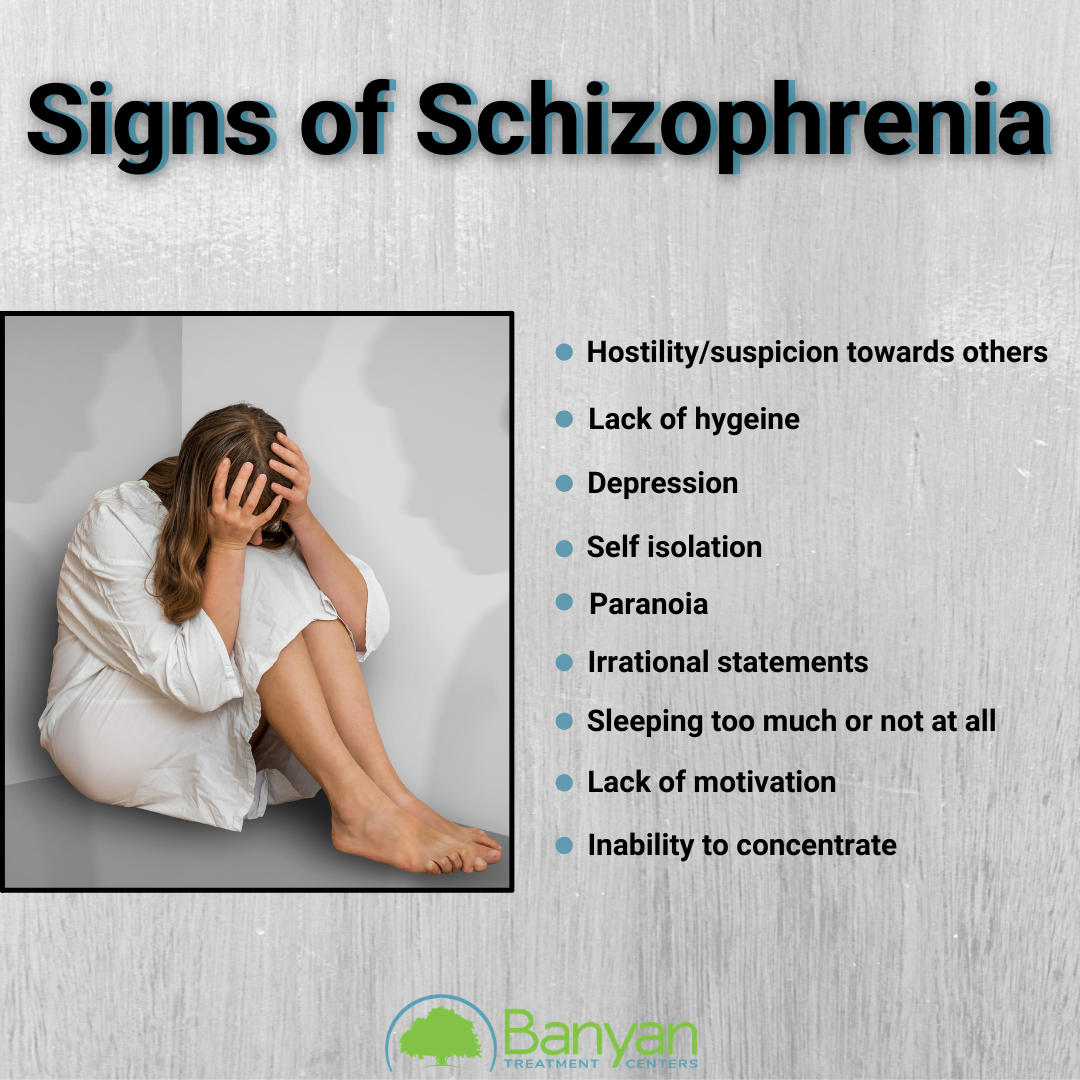
The initial symptoms of schizophrenia include:
- Depression
- Self-isolation
- Lack of motivation
- Lack of personal hygiene
- Hostility or suspicion towards someone they used to trust
- Irrational statements
- Saying strange words or phrases
- Inability to concentrate
- Sleeping too much or not at all
- Paranoia
Although these signs may point towards a different condition, they shouldn’t be taken lightly. It’s important to seek professional help for a loved one if they begin to show these signs of schizophrenia.
Without professional treatment, the individual’s condition may worsen. Symptoms of schizophrenia, such as hallucinations, delusions, disorganized speech, and disorganized behavior, can prevent a person from living a full and happy life.
Because these symptoms are often difficult to manage without treatment, many schizophrenics turn to drug or alcohol abuse in an attempt to self-medicate. This could eventually lead to addiction, causing further problems.
For individuals in the Cathedral City area seeking support, our behavioral health center in Cathedral City, CA offers psychiatric care programs, including medically supervised detox designed to address mental health conditions.
Getting into treatment is easy with our free insurance verification
"*" indicates required fields
What Triggers Schizophrenia in Adults?
The exact causes of or triggers for schizophrenia are unknown. However, research associates the onset of schizophrenia with a combination of physical, genetic, psychological, and environmental factors. As a result of these factors, certain individuals may be more prone to schizophrenia than others, particularly individuals with a family history of schizophrenia. If you suspect that you or a loved one has schizophrenia, seek out your doctor or a mental health professional for an assessment and official diagnosis.
Taking the first step toward recovery is possible — reach out to our behavioral health center in Castle Rock, CO to learn about psychiatric care programs options that can make a difference.
If you or a loved one is struggling with a mental illness or even an addiction, call Banyan Treatment Centers today at 888-280-4763 or reach out to us online and learn more about our mental health programs.
Sources
- National Institute of Mental Health (NIMH). (None). Schizophrenia - National Institute of Mental Health (NIMH).
- U.S. Food and Drug Administration. (2023). ADDERALL XR Label.
- National Center for Biotechnology Information (NCBI). (2005). The Neurobiology of Cocaine Addiction.
- National Institute on Drug Abuse (NIDA). (None). Cocaine | National Institute on Drug Abuse (NIDA).
- National Center for Biotechnology Information (NCBI/PMC). (2015). Insight in Schizophrenia: Relationship to Positive, Negative and Cognitive Symptoms.
- FDA. (2007). Vyvanse (lisdexamfetamine dimesylate) Prescribing Information.
- NCBI Bookshelf. (2023). Anosognosia - StatPearls - NCBI Bookshelf - NIH.
- National Center for Biotechnology Information (NCBI/PMC). (2022). Interaction With the Lipid Membrane Influences Fentanyl....
- National Institutes of Health (NIH). (2013). Genetics of Childhood Onset Schizophrenia - PMC - NIH.
- Cureus. (2022). Differentiating Childhood-Onset Schizophrenia From Other Phenomenology in a 7-Year-Old Patient.
- National Center for Biotechnology Information (NCBI), National Library of Medicine. (2024). Physiology, Catecholamines - StatPearls.
- NCBI Bookshelf / StatPearls. (None). Schizophrenia - StatPearls - NCBI Bookshelf - NIH.
- National Institute on Alcohol Abuse and Alcoholism (NIAAA). (2023). Fetal Alcohol Spectrum Disorders.
- RAND Corporation. (2023). Trends in Overdose Deaths involving Gabapentinoids and Z-drugs.
- Brain Sciences. (2016). Neuropharmacology of N,N-Dimethyltryptamine. DOI: 10.3390/brainsci6090024
- Psychiatr Clin Psychopharmacol. (2015). Revisiting the 'self-medication' hypothesis in light of the new data on antipsychotics' dysphoric effects.
- National Center for Biotechnology Information (NCBI), National Institutes of Health. (None). Depression - StatPearls - NCBI Bookshelf - NIH.
- PMC. (2016). A Review of Childhood-Onset Schizophrenia.
- Molecular Pharmacology. (2018). Cannabinoid Receptors and the Endocannabinoid System.
Wherever you are, we have you.
Not sure what level of care fits your needs? Our admissions team can help you understand your options confidentially.
Medical Disclaimer
Banyan Treatment Centers aims to improve the quality of life for people struggling with substance use or mental health disorders with fact-based content about the nature of behavioral health conditions, treatment options and their related outcomes. We publish material that is researched, cited, edited and reviewed by licensed medical professionals. The information we provide is not intended to be a substitute for professional medical advice, diagnosis or treatment. It should not be used in place of the advice of your physician or other qualified healthcare providers.