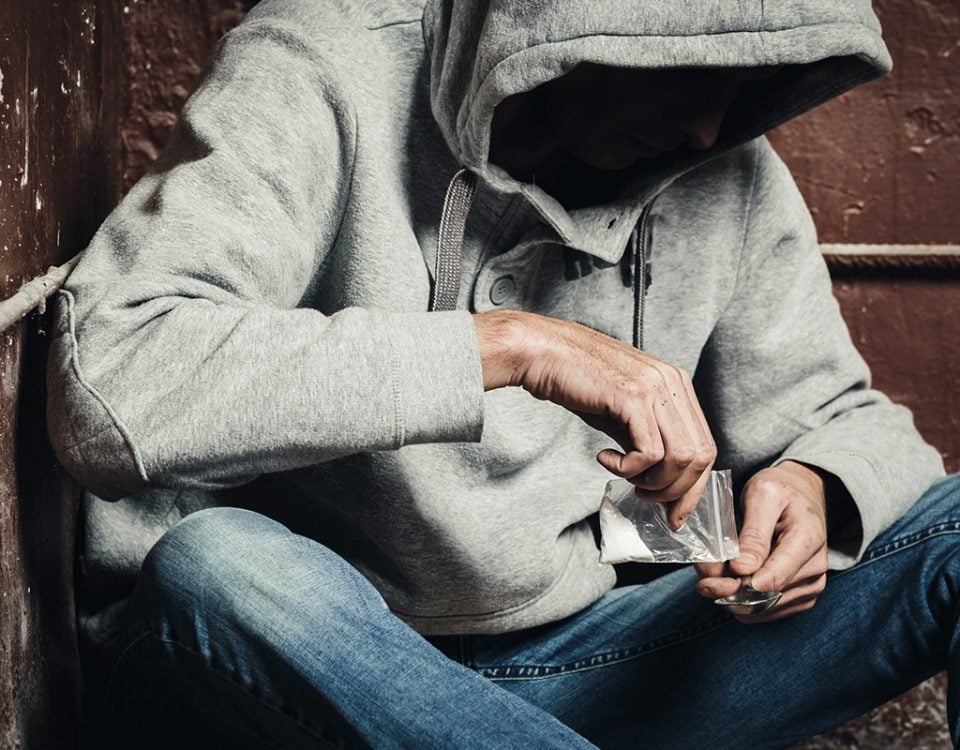


When people think of alcoholics, they may initially picture someone who is grungy, jobless, and homeless.
This is a common stereotype, but is it true? While homelessness and alcoholism are often associated with one another, as an alcohol abuse treatment center in Pompano, we know that this is not always the case.
Understanding alcohol use disorder is the first step — our alcohol detox and rehab facility in Cathedral City, CA offers alcohol use disorder treatment to help individuals begin their recovery journey.
Homelessness in the United States
Unfortunately, there are several homeless people spread out across the United States. It is estimated that on any given night in 2018, there were about 553,000 homeless people. At 67% percent, the majority of these people are individuals, while the remainder of the population is made up of families.1
While being homeless and alcoholism are often associated with one another, people end up homeless for several reasons.
For individuals in the Castle Rock area seeking support, our alcohol recovery center in Castle Rock, CO offers alcohol addiction treatment, including residential treatment designed to address alcohol use disorder.
Getting into treatment is easy with our free insurance verification
"*" indicates required fields
Homelessness and Alcoholism Statistics
While there were over an estimated 550,000 homeless people on any night in 2018, the 2018 National Survey on Drug Use and Health found that 14.4 million adults in the United States were suspected of having an alcohol use disorder.2 This shows that far more people struggle with alcoholism than homelessness and not every alcoholic is homeless.
Actually, research suggests that 35% of the homeless population has an alcohol use disorder.3 This is a higher occurrence than in the general population; it is important that the homeless population get help for substance abuse and alcoholism, but it is still less than half of the total population. This number also doesn’t take into account the number of homeless alcoholics who were struggling with alcoholism before becoming homeless versus those who became alcoholics as a result of living on the street. Alcoholism and substance abuse may increase the risk of becoming homeless, but it is not guaranteed. The best thing to do is to get professional help with an intensive outpatient program or similar program sooner rather than later to avoid heading down this path. There are several reasons that someone may become homeless; alcohol is just one of them.
In reality, alcoholics are a diverse group made up of several types of people. While homeless alcoholics may make up part of this population, it is also estimated that 19.5% of alcoholics fall under what qualifies as the functional subtype.4 These functioning alcoholics are typically well educated with families and stable careers. Their loved ones may not even know that they are struggling with alcohol.
No matter where you or a loved one falls on the spectrum of alcohol abuse disorders, it is important to get help. Our various addiction treatment programs in Pompano Beach are designed to work with people who suffer from varying degrees of alcoholism.
Stop letting alcohol or drugs control your life or the life of a loved one. At Banyan Treatment Centers Pompano, we want to help.
Recovery from problematic drinking starts with the right support — our alcohol detox and rehab facility in Lisle, IL offers alcohol addiction treatment to help you or your loved one take that next step.
By calling 888-280-4763, you could take the first step to sobriety and letting your addiction spiral out of control.
Sources:
Wherever you are, we have you.
Not sure what level of care fits your needs? Our admissions team can help you understand your options confidentially.
Medical Disclaimer
Banyan Treatment Centers aims to improve the quality of life for people struggling with substance use or mental health disorders with fact-based content about the nature of behavioral health conditions, treatment options and their related outcomes. We publish material that is researched, cited, edited and reviewed by licensed medical professionals. The information we provide is not intended to be a substitute for professional medical advice, diagnosis or treatment. It should not be used in place of the advice of your physician or other qualified healthcare providers.