
Dopamine is a neurotransmitter that’s responsible for transmitting signals between nerve cells in the brain. This particular chemical directly affects the reward and pleasure centers of the brain, which affects mood. While high dopamine levels can boost one’s mood, low dopamine levels can lead to depressive symptoms. Dopamine also plays an active role in drug abuse and addiction. We’ve already talked about some natural ways to get high, so here are some dopamine foods that can boost your mood naturally and help you stay on track in addiction recovery.
If concerns about addiction are affecting your daily life, the team at our residential treatment center in Boca Raton, FL can guide you through residential treatment options designed for lasting recovery.
Questions about our Facilities or Programs?
Our admissions coordinators are available 24/7 to answer any questions you may have as you consider whether treatment at Banyan is right for you or your loved one.
Dopamine and Food
Before we go into what foods help with dopamine production, we wanted to address a diet called the dopamine diet. This diet is advertised as one that boosts mood while helping you shed pounds. Certain celebrities like TV chef Tom Kerridge have popularized this diet in recent years.
One study tested this theory and found that eating a high-protein breakfast including eggs, lean meats, and dairy reduced mid-morning cravings while increasing dopamine levels.1 There’s also emerging evidence that people who are overweight may have impairments in dopamine receptors due to long-term exposure to sugary and fatty foods.
Foods That Increase Dopamine
In addition to pleasurable activities like eating, addictive drugs like cocaine and opioids also boost dopamine levels. As a Boston rehab, we’re aware of the impact that drugs have on dopamine, which in turn makes recovery so difficult. The bulk of addiction is a psychological and emotional attachment to how the drug makes the person feel.
Especially for people who struggle with mental illness, dopamine-boosting drugs have both a physical and emotional impact, starting with the reward center in the brain and ending with improved mood.
What’s more, chronic drug abuse forces dopamine production to the point where the brain becomes dependent on the substance to function.
For this reason, addiction recovery can be just as psychological as it is physical. Fortunately, eating foods to help dopamine production is a natural way to improve your mood and stick to your recovery.
According to research, dopamine-boosting foods are usually high in protein and l-tyrosine, an amino acid that’s commonly found in protein. Therefore, eating a diet that’s high in amino acid l-tyrosine can increase your likelihood of having the building blocks needed for efficient dopamine production.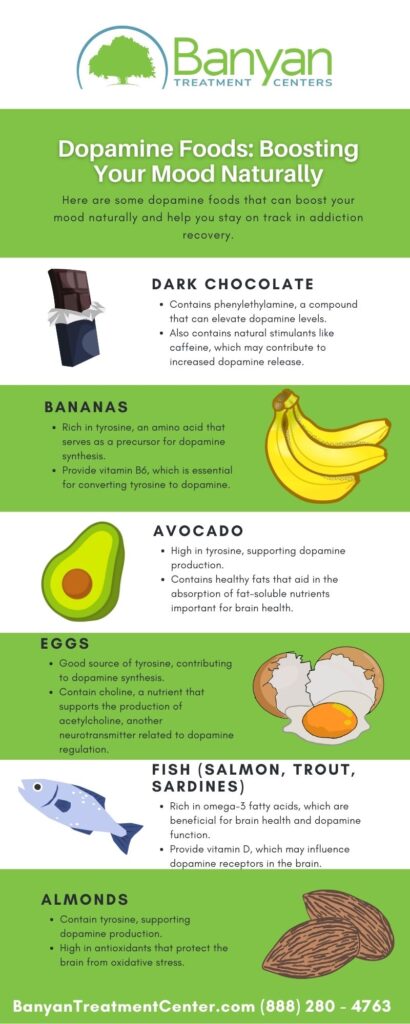
Below are common foods that help release dopamine:
- Apples
- Avocados
- Beets
- Chocolate
- Coffee
- Dairy foods such as milk, cheese, and yogurt
- Dark chocolate
- Eggs
- Fava beans
- Fruit and vegetables, particularly bananas
- Green leafy vegetables
- Green tea
- Kefir (a fermented dairy product)
- Lima beans
- Nuts and seeds like almonds, walnuts, and flax seeds
- Oatmeal
- Olive oil
- Omega-3 rich fish such as salmon and mackerel
- Oregano
- Peanuts
- Raw sauerkraut
- Rosemary
- Sesame and pumpkin seeds
- Soy products
- Turmeric
- Unprocessed or lean meats like beef, chicken, and turkey
- Watermelon
- Wheat germ
- Yogurt
In searching for what foods increase dopamine, make sure you speak to a healthcare provider before making any major changes to your diet. If you have an underlying condition, such as Crohn’s Disease, for example, you might be limited in the foods you can safely eat.
If you’re in addiction recovery, it’s also crucial not to fall into a cross-addiction situation by relying on eating foods to increase dopamine. Cross-addiction is when someone switches one addiction for another.
While eating dopamine-rich foods is a great way to boost your mood naturally, don’t abuse this outlet. Overeating can lead to a variety of other issues, so it’s important to speak to your doctor about any major changes you want to make to your routine.
The connection between addiction and long-term health underscores the importance of professional support, like the residential addiction treatment offered at our residential treatment center in Cathedral City, CA.
Getting into treatment is easy with our free insurance verification
"*" indicates required fields
Help for Drug Addiction
If you or a loved one is struggling with drug or alcohol abuse, we can help. Banyan Treatment Center offers Massachusetts drug and alcohol treatment that incorporates individual and group therapy modalities to promote personal healing, peer support, and community as part of the recovery process.
If you're ready to address substance abuse, contact our drug and alcohol rehab in Castle Rock, CO to explore residential treatment and begin the path toward healing.
To learn which of our levels of care for substance abuse treatment is right for you, call Banyan today at 888-280-4763.
Sources
- National Institute on Drug Abuse (NIDA). (None). Treatment and Recovery | National Institute on Drug Abuse (NIDA).
- Brain Research Reviews. (1983). Dopamine and depression: a review of recent evidence. I. Dopamine receptor supersensitivity and the movement disorders of depression.
- Current Developmental Disorders Reports. (2022). Tolerance to Stimulant Medication for Attention Deficit Hyperactivity Disorder (ADHD): A Review of Treatment Efficacy. DOI: 10.1007/s40474-022-00250-6
- Cureus. (2022). Accidental Ingestion of Tetrahydrocannabinol-Laced Gummies Causing Bradycardia and First-Degree Atrioventricular Block in a Pediatric Patient: A Case Report. DOI: 10.7759/cureus.26826
- PMC. (2016). The Effects of Acute Dopamine Precursor Depletion on the Motivation to Exercise in Anorexia Nervosa: A Pilot Study.
- National Center for Biotechnology Information (NCBI), National Institutes of Health. (None). Cannabis Use and the Abuse of Other Substances.
- National Institute on Drug Abuse (NIDA). (2023). N,N-Dimethyltryptamine (DMT).
- NIH/National Center for Biotechnology Information. (2022). Estimating Risk of Antidepressant Withdrawal from a Review of Randomized Controlled Trials and Cohort Studies.
- Dialogues in Clinical Neuroscience. (2015). The overlap between anxiety, depression, and obsessive-compulsive disorder. DOI: 10.31887/DCNS.2015.17.3/ggoodwin
- Nutrients (MDPI). (2018). Dietary Neurotransmitters: A Narrative Review on Current Knowledge and Therapeutic Potential. DOI: 10.3390/nu7080059
- U.S. Food and Drug Administration. (2014). Adderall - accessdata.fda.gov.
- Office of Dietary Supplements, National Institutes of Health. (2015). Vitamin B-6.
- BMJ Case Reports. (2016). Snorting the clivus away: an extreme case of cocaine-induced midline destructive lesions.
- PLoS One. (2018). Pre-sleep treatment with galantamine stimulates lucid dreaming: A double-blind, placebo-controlled, crossover study. DOI: 10.1371/journal.pone.0201246
- Translational Psychiatry. (2015). Caffeine increases striatal dopamine D2/D3 receptor availability in the human brain. DOI: 10.1038/tp.2015.46
- National Center for Biotechnology Information (NCBI/PMC). (2022). Potential Role of Curcumin for the Treatment of Major Depressive Disorder: A Randomised, Double-Blind, Placebo-Controlled Trial.
- JAMA Network (via PMC/NIH). (2019). Patterns in Outpatient Benzodiazepine Prescribing in the United States from 2003 to 2015.
- NIH/PubMed Central. (2014). Hepatitis C Infection in Non-Treatment-Seeking Heroin Users.
- Perceptual and Motor Skills. (2001). Exercise duration and mood state: how much is enough to feel better?.
- Nutrients. (2023). The Survival of Psychobiotics in Fermented Food and Their Potential as Novel Therapy in Psychiatric Disorders.
- BMC Psychiatry. (2010). Reasons for illicit drug use in people with schizophrenia. DOI: 10.1186/1471-244X-10-94
- National Center for Biotechnology Information (NCBI), National Library of Medicine. (2019). Chapter 2—How Stimulants Affect the Brain and Behavior.
- NCBI Bookshelf (SAMHSA TIP). (2005). 2 Types of Groups Commonly Used in Substance Abuse Treatment.
- National Institutes of Health (NIH). (2021). Obesity and Cardiovascular Disease - PMC - NIH.
- National Institute of Diabetes and Digestive and Kidney Diseases (NIDDK). (None). Eating, Diet, & Nutrition for Crohn’s Disease.
Wherever you are, we have you.
Not sure what level of care fits your needs? Our admissions team can help you understand your options confidentially.
Medical Disclaimer
Banyan Treatment Centers aims to improve the quality of life for people struggling with substance use or mental health disorders with fact-based content about the nature of behavioral health conditions, treatment options and their related outcomes. We publish material that is researched, cited, edited and reviewed by licensed medical professionals. The information we provide is not intended to be a substitute for professional medical advice, diagnosis or treatment. It should not be used in place of the advice of your physician or other qualified healthcare providers.